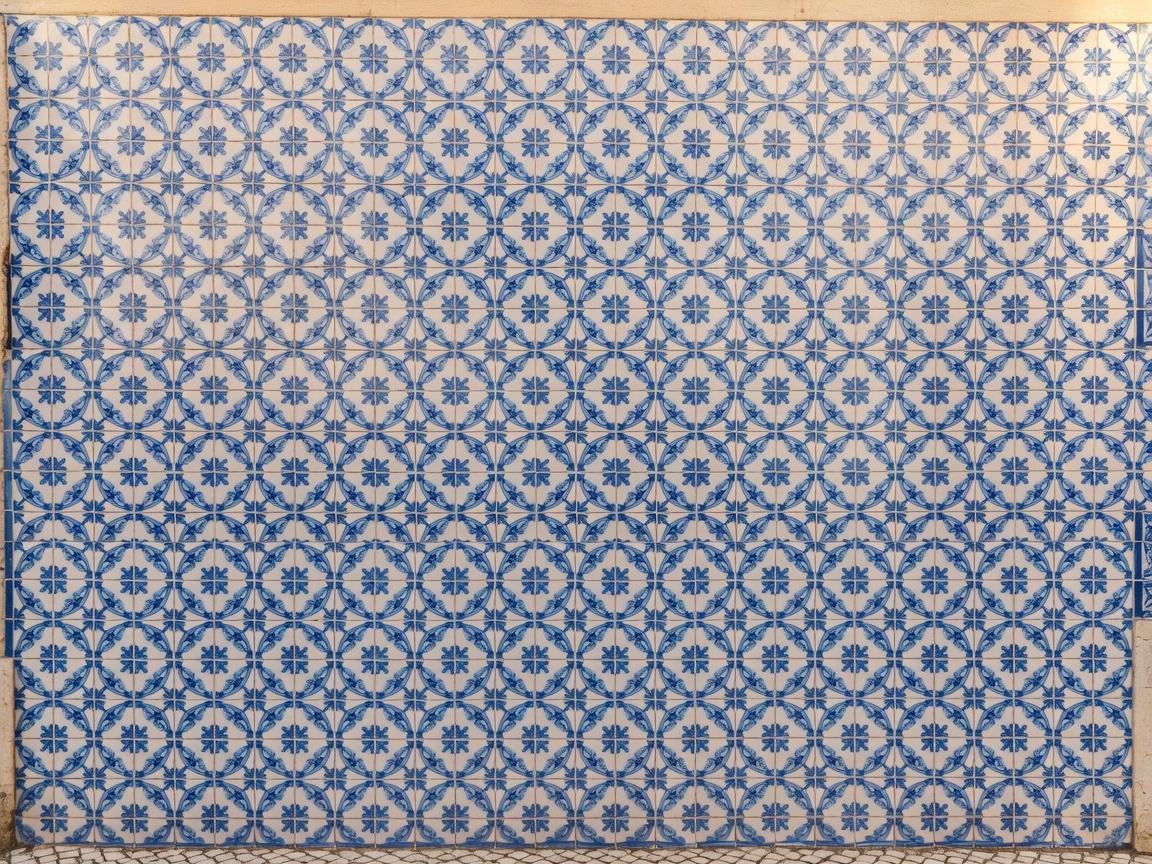
Lisbon is the only European capital whose architecture is legible as a ceramic archive. Walk any street in Graça or Estrela and you pass a century of manufacturing decisions, taste shifts and economic conditions, all fired onto clay and screwed to the outside of a building. Once you can date a panel roughly by eye, the city reads differently.
Azulejo derives not from azul (blue) but from the Arabic al-zulayj, meaning polished stone. The earliest tiles that reached Portugal in the fifteenth century were Hispano-Moresque pieces from Seville and Valencia — geometric, interlocking, non-figurative, with the colours separated by raised ridges or by a manganese-grease line so the glazes would not run together.
If you see small, repeating, strictly geometric tiles in green, ochre, white and dark blue, with a slightly uneven surface, you are probably looking at something very old or a deliberate modern homage.
By the seventeenth century, Dutch Delftware and imported Chinese porcelain had shifted European taste decisively toward blue on white. Portuguese workshops adopted the palette but used it at a scale the Dutch never attempted: entire church interiors, monastery cloisters and palace stairwells covered in narrative panels several metres high.
This is the classic image of the azulejo — figurative scenes, hunting parties, saints, ships, framed by baroque cartouches and scrollwork. Look for the frame: the more elaborate the border, the more likely you are in the late seventeenth or early eighteenth century.
A tile panel is a piece of printed matter that happens to be waterproof. It was always intended to be read.
The 1755 earthquake changed everything, including ceramics. The Marquis of Pombal's reconstruction of the Baixa needed enormous volumes of cheap, standardised building material fast. Tile production industrialised: simpler patterns, modular repeats, fewer colours, faster firing. These are the tiles that cover so much of central Lisbon — small-scale, repeating, often yellow and blue, designed to be produced by the thousand and laid by semi-skilled labour.
They are frequently dismissed as the boring ones. They are in fact the most historically revealing: they are the first mass-produced architectural cladding in Europe.
The habit of tiling the outside of ordinary houses arrived in the nineteenth century, partly via Brazil, where returning emigrants had seen how well tile performed against damp and heat. Suddenly, whole streets of Lisbon townhouses were clad in relief-moulded tiles with strong colour — deep greens, rust reds, bronze glazes catching the low winter sun.
Then came Art Nouveau: sinuous floral panels, peacocks, stylised trees, often signed by the factory. The Fábrica Viúva Lamego and the Fábrica de Sant'Anna are the two names to look for; both are still operating today, and both supply contemporary hotels and restaurants.
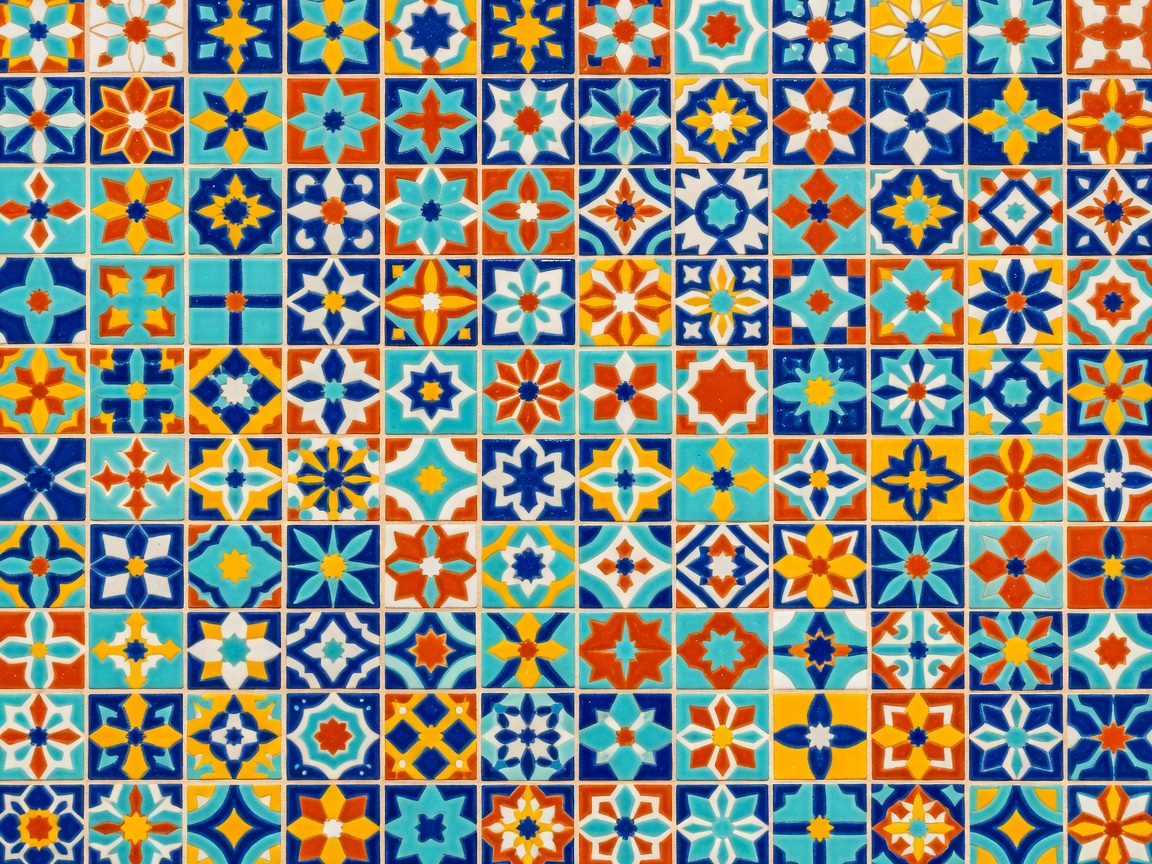
The twentieth century produced two great azulejo moments. The first was the mid-century commissioning of major artists — Maria Keil's work across the Lisbon metro system remains the most-seen public art in Portugal. The second is the current revival, in which small studios produce hand-painted work for private houses, restaurants and hotels, and in which street artists have begun incorporating ceramic into murals.
All five hotels in our collection engage with this material history. Verride and Ludovice retain original eighteenth-century panels inside historic rooms; Bairro Alto Hotel commissioned contemporary ceramic work from Portuguese studios during its restoration; Corinthia uses tile motifs abstracted into its interior detailing; and the Four Seasons Ritz sits inside a mid-century building that belongs to the same modernist moment as the metro commissions.
| Stop | What to look for | Approx. time |
|---|---|---|
| Museu Nacional do Azulejo, Madre de Deus | The full chronology in one building, including the 23-metre panorama of pre-earthquake Lisbon | 90 min |
| Igreja de São Roque, Bairro Alto | Early seventeenth-century patterned tile beside extravagant baroque chapels | 30 min |
| Rua da Bica de Duarte Belo | Nineteenth-century façade tiling in situ, still lived in and weathering | 20 min |
| Fábrica Viúva Lamego showroom, Intendente | Contemporary production, hand painting, commissions | 40 min |
| Lisbon metro: Campo Grande and Intendente stations | Maria Keil and later artist commissions in public space | 30 min |
Take the walk on your first morning. Everything you look at for the rest of the trip — including the lobby of whichever hotel you have chosen — becomes more interesting afterwards.